
For the Toyota you plan to keep
You didn’t keep your Toyota this long to stop doing the work yourself.
For the owner past 150,000 miles, an awkward fastener can feel like more than a repair problem. Here’s another way to look at the space around it.

If you’ve kept a Toyota past 150,000 miles, you probably have a different answer to the question, “When are you replacing it?”
You know how it starts on a cold morning. You know the sound it makes pulling into your driveway. You remember which jobs you did yourself, which ones needed help, and what you want to take care of next.
There’s history in that driver’s seat.
Keeping it running is part of the satisfaction of owning it.
That’s why the moment in the Toyota ad feels familiar: the coffee goes down, the flashlight comes out, and one cramped spot holds your attention longer than it should.
You still want to do the work. You just need a way to get your tools into a useful position.
The part you can see. The space you can’t use.
Picture a Saturday in your garage.
The hood is up. You’ve put the small parts somewhere they won’t roll away. There’s room on the bench for the tools you expect to need.
Then you reach a fastener tucked into an awkward pocket of space.
The light gets to it. A socket may get to it. But once the ratchet is connected, the handle has nowhere useful to travel.
You try the shorter one.
Then an extension. Then the joint that worked on the last awkward job.
Each combination changes something. None quite puts your hand where you need it.
So you look back at the engine bay. The job is still there, waiting. You start working out what would need to come apart to create more room, and whether this is where you ask someone else to take over.
For an owner who enjoys maintaining the same car year after year, that decision carries some weight.
You wanted to put the tools away knowing you’d taken care of one more thing.
Before another trip to the drawer, look beside the fastener.
There’s a useful question to ask before trying another handle:
Where is there room to turn a ratchet—and is there a clear route from there to the socket?

A straight extension moves the connection along the socket’s axis. That’s useful when the open space is farther back along that line.
But sometimes the space you could work in is off to one side.
You can see an opening where your hand would fit. It just doesn’t line up with the fastener.
That is the kind of arrangement an offset drive is designed to address.
It separates the point where you turn the ratchet from the point where the socket turns the fastener.
The bolt stays where it is. You look for a better place to apply the turn.
What the chain inside the blue bar actually does.
The LumiLux Offset Extension connects a drive point at one end of a bar to another at the opposite end, using an internal chain.
Your ratchet connects at the input. The socket connects at the output, with the appropriate connections for your setup.
As you turn the ratchet, the chain transfers that rotation through the body to the socket end.
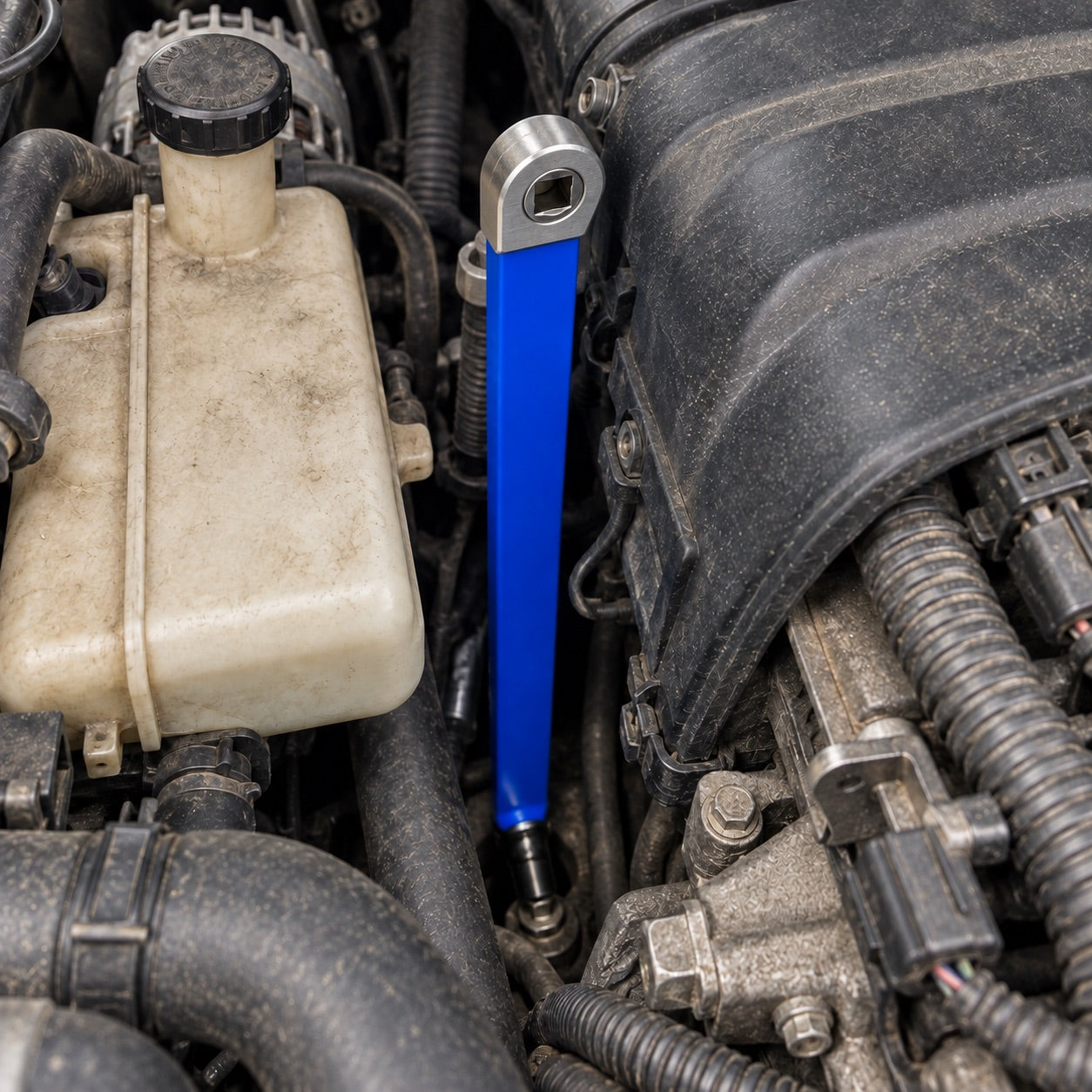
Socket at the fastener. Ratchet where there’s room to work.
That is the reason to consider the blue bar from the ad.
You’re checking three places: the complete socket-and-output assembly at the fastener, the route for the bar, and the space to connect and operate your ratchet at the other end.
When those clearances suit the tool, you have another layout to work with.
You can assess the socket’s seating and support the output while working from the separate input position. The right socket, full engagement and proper alignment still matter throughout the job.
The chain transfers rotation. It doesn’t lock the socket onto a fastener or restore a damaged hex.
A tool earns its place when you know when to reach for it.
Think about the tools you already keep close to hand.
There’s probably an extension you bought for one particular job. A compact ratchet that finally gave you enough room somewhere. A socket you’re always careful to put back in the right place.
You remember what each one helped you do.
An offset extension belongs in that same decision: does it give you a useful arrangement for an access problem your current tools don’t solve comfortably?
It won’t suit every opening. The bar needs clearance, the connections need to match, and the task needs to stay within the tool’s documented limits and the vehicle’s service procedure.
But when you can check those things, you can make an informed decision about the job in front of you.
That matters more than buying another tool and hoping.
The mileage is yours. So is the decision about what comes next.
Go back to that Saturday for a moment.
You’re standing beside a Toyota you’ve kept through years of ordinary life. Commutes. Early starts. Weekend trips. The miles that added up while you were busy doing everything else.
You know there will be more maintenance. That was always part of keeping it.
What you want is to keep understanding your options—to look at a job, choose the right equipment, and decide what you can reasonably take on yourself.
Sometimes that decision is to get help. Sometimes a different tool arrangement gives you a way forward.
The LumiLux Offset Extension is worth a closer look when the problem in front of you is room to work the drive.
If a particular fastener came to mind while reading, start with that space. Check your exact Toyota model, engine and repair, then compare the access with the tool’s dimensions and connections.
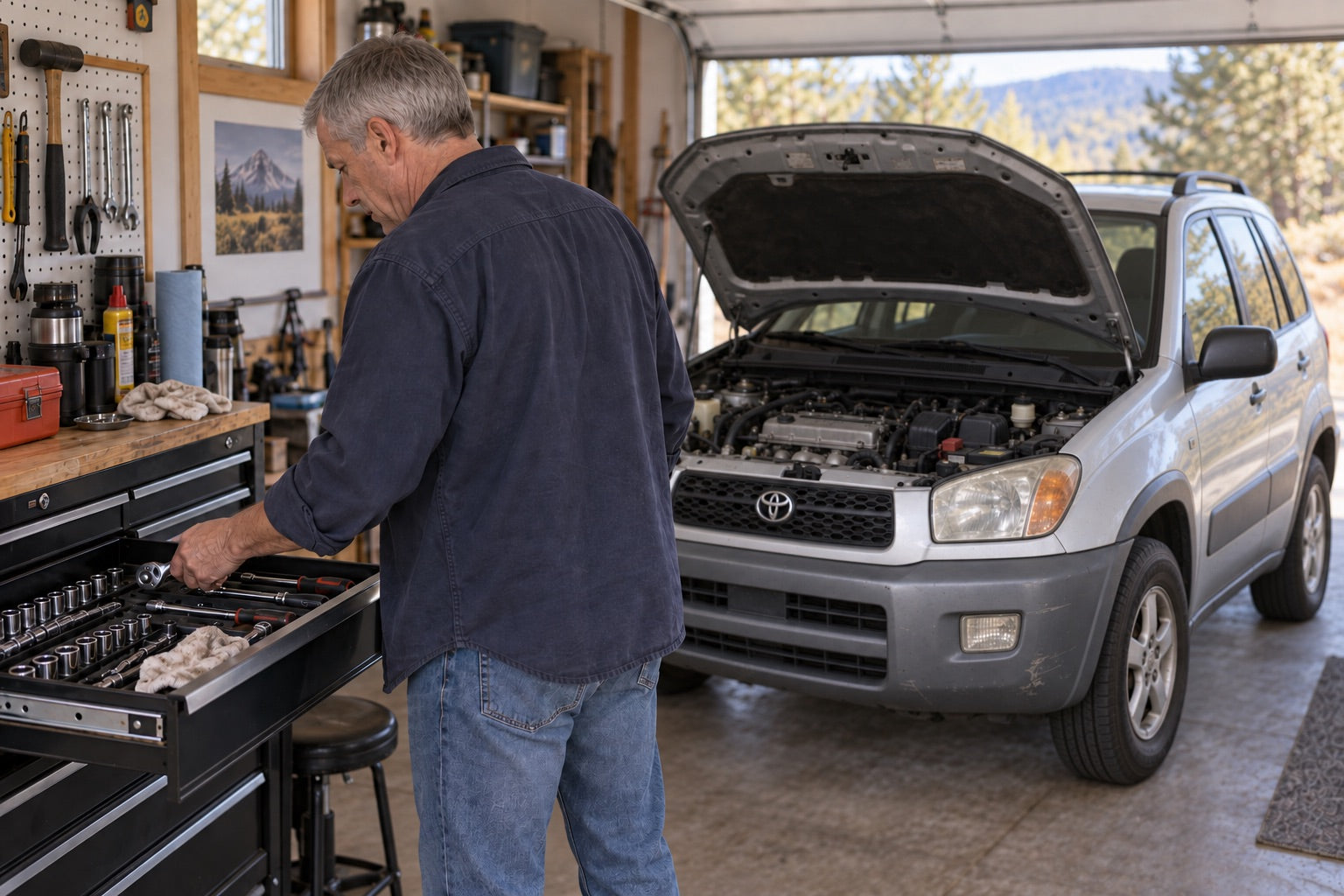
For the job you have in mind
Take a closer look at the LumiLux Offset ExtensionView product information and purchase options.
Your Toyota. Your tools. The next job you want to take care of.
Checking vehicle fit
Fit depends on the exact vehicle, task, accessories and available clearance. Follow the vehicle service procedure and the tool’s documented limits. LumiLux is not affiliated with Toyota.